
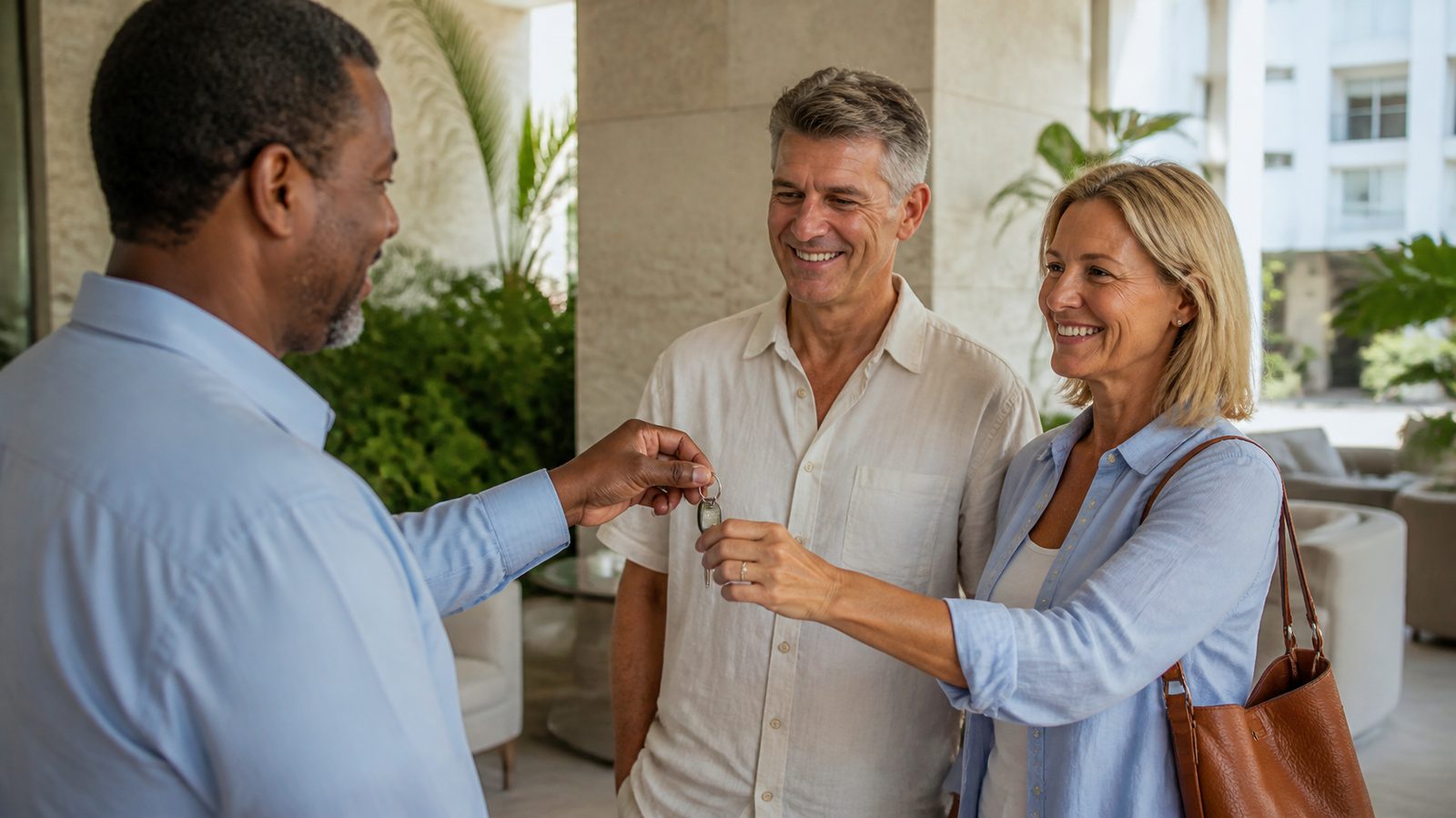
The Dominican Republic is one of the most popular places in the Caribbean to buy a vacation home or an investment property. Foreigners can buy with the same rights as Dominican citizens, and the process can be done almost entirely from abroad. Here is what you need to know before you buy.
Can foreigners buy property in the Dominican Republic?
Yes. Foreigners can own property in their own name, with the same ownership rights as locals. You do not need residency to buy. You can also buy through a company, which some investors prefer for tax planning or resale.
Step 1: Define your goal and location
Punta Cana and Bávaro: the largest tourism market, ideal for vacation rentals.
Cap Cana: a gated premium community with a marina and golf, higher nightly rates.
Juan Dolio: beachfront living 45 minutes from Santo Domingo, at a lower entry price.
Santo Domingo: the capital, with strong long-term rental demand from professionals.
Step 2: Do your due diligence
Before you pay a reservation fee, ask for:
The land title certificate and a certificate of legal status showing no liens.
The construction license from the Ministry of Housing (MIVHED) and municipal permits.
Environmental permits for coastal projects.
The CONFOTUR resolution, if the project offers tourism tax exemptions.
The developer's track record of completed projects.
Always hire an independent Dominican lawyer to review the documents and the contract.
Step 3: Prefer projects held in a trust
Under Law 189-11, many pre-construction projects use a real estate trust (fideicomiso). Your payments go to an account managed by a licensed trust company, and funds are released to the developer as construction progresses. It is one of the best protections available for buyers.
Step 4: Understand CONFOTUR
Projects approved under the tourism incentive law (Law 158-01) can offer buyers an exemption from the 3% property transfer tax on the first purchase and from the annual property tax (IPI) for the remaining incentive period, which is counted from the project's approval date.
Step 5: Budget for closing costs
Transfer tax: 3% of the property value, unless exempt under CONFOTUR.
Legal and notary fees: for contract review and title transfer.
Mortgage costs, if you finance locally.
HOA fees: monthly maintenance once the unit is delivered.
Step 6: Buy remotely if you need to
You can sign a power of attorney in your home country, have it apostilled, and let your lawyer sign on your behalf. Payments are made by international wire transfer to the project or trust account, never to personal accounts.
Frequently asked questions
Do I need a Dominican bank account?
Not to buy. It can be useful later to pay HOA fees and utilities, or to receive rental income.
Can I get a mortgage as a foreigner?
Some Dominican banks lend to foreigners, usually with a larger down payment. Many buyers prefer the developer's payment plan during construction.
Is buying property a path to residency?
The Dominican Republic offers investor residency options. Requirements change, so check with an immigration lawyer.
Let's talk
At Tuanis Real Estate we help international buyers find, verify and close on properties in Punta Cana, Cap Cana, Juan Dolio and Santo Domingo. We speak English and work with trusted local lawyers.
Book a 30-minute call or message us on WhatsApp at +1 809-852-1234.
Kenneth Martínez, Master Broker, Tuanis Real Estate.